For growth and prosperity

For growth and prosperity

Thursday, 19 May 2011

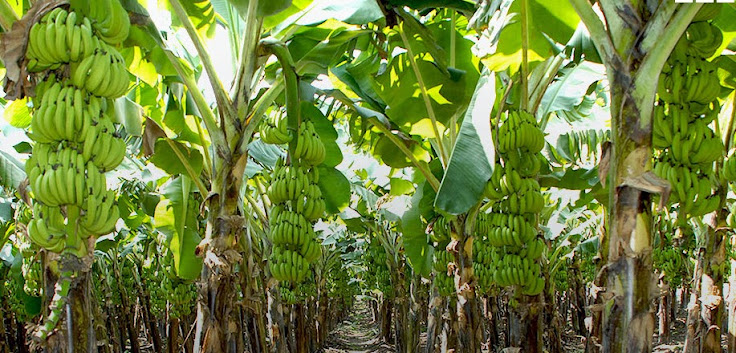
Dos and Don'ts in TC Banana cultivation

MANAGEMNT OF TC RAISED PLANTS IN THE FIELD

No
Parameters
Do’s
Don’ts
1

Study the cultivation practices pamphlet in detail for information and recommendations.

2
Soil testing
It’s essential to understand the status of major and minor elements for their deficiency / excessiveness and presence of pathogenic fungi / bacteria / nematodes.
Don’t cultivate Banana in nutrient deficient and nematode infested field.
3
Soil type
Sandy loam soil organically rich with pH 6.0 – 7.5 and having good drainage.
Soils exceeding pH 7.5 are not suitable. Addition of decomposed press mud & organic manuring will reduce alkalinity.
4.
Field Manuring
Green manuring followed by dung manuring is very useful for soil conditioning.
Try to avoid planting of banana in the field devoid of organic matter.
5.
Wind shield
Always put a wind shield all around the field preferably of Sesbania ( Dhaincha or crotalaria juncea (Sunhemp) plants for maintaining humidity and high velocity wind control.
Don’t plant banana plants in the field without wind shield.
6.
Planting
Use Thimet, Furadon and neem cake powder in the pits before planting. Avoid planting during cold weather (below 150 C), extreme summer (above 400C) or heavy rainy days.
Don’t plant Banana plants in the filed without application of insecticides and neem cake powder in the pits.
7
Spacing
For Grand Nain 6 feet x 5 feet spacing has proved ideal. Even 6 feet x 6 feet, 7 feet x 5 feet could also be used considering climate & soil conditions.
Lesser spacing i.e 5 feet x 5 feet or still lower is not advisable for Grand Nain.


8.
Surrounding cultivation
Remove the cucurbitaceous plants such as Smoothguard, Riderguard, Ashguard, Cucumber, Pumpkin etc., Solanaceous plants such as Brinjal, Tomato, Chili etc. Legume crops such as Beans, Moong etc and virus susceptible weeds from the surrounding of the Banana field because these are hosts for viruses. Various aphids, mealy bags and insects acts as vector in spreading viral diseases in Banana.
Don’t cultivate plants of the said families and don’t allow virus susceptible weeds to grow in the neighbourhood of Banana plot. Try to refrain Sugarcane and Citrus planted fields in the neighbourhood of Banana plot and also the planting of T.C Banana in Sugarcane fields (previous crop in the field)
9
Pesticides sprays
Continue intermittent foliar sprays of insecticides, fungicides and soil application of pesticides right from the initial establishment of plants in the field to keep the aphids and insects away.
Don’t be irregular in spraying of insecticides otherwise the crop may be affected.
10
Removal of infected plants
Uproot the diseased ( Virus or other ) plants along with the suckers and roots, burn them outside the field.
Don’t leave any virus infected plant growing in the field otherwise that will serve as an inoculum for the spread of disease.
11
Irrigation &
Fertigation
Always prefer for drip irrigation system and apply liquid fertilizer for better growth of plants. Do optimum irrigation. Apply additional quantity of water during winters to avoid injury from chilled weather.
Don’t go for flood irrigation and application of chemical fertilizers from above. Don’t let the field dry in cold weather during weather.


12
Cultural practices
Strictly follow the cultural practices recommended by the company because these have been developed after intensive trials
Do not follow cultural practices other than recommended by the company.
13
Initial care of plants
Extreme care must be taken for initial three months of planting regarding irrigation, fertigation & pesticides sprays otherwise yield will be affected. Continue the fertigation schedule without fail.
Don’t let shortage of fertilizers, pesticides and irrigation for at least initial three to four months of planting.
14
Desuckering
Keep desuckering on, right from the establishment of plant till harvesting.
Don’t allow clusters of baby shoots growing all around the mother plants. It will weaken them and reduce the yield to a high extent.
15
Weeding
Make weeds removal as a routine practice and keep the field clean in and around.
Weeds should not be allowed to grow in and around the Banana field.
16
Propping
Prop suitably the plants bearing heavy bunches.
Do not leave plants without prop bearing heavy bunches.
17
Bunch Protection
Protect the bunches from heat by dry leaf cover and from insects & pests by skirting polybag.
Don’t leave the bunches uncovered.
18
Harvesting
Harvest the bunch and give a top cut to the plant leaving the Pseudostem as such so that the nutrients in it leach down and are available to young plant left for first ratoon (if to be taken).
Don’t cut the Pseudostem from base as it is a common practice of the farmers.
19
Agronomist help
Incase of any problem please contact our authorized Agronomist or our dealer in your area.
Do not consult any other person for the hitech cultivation practices.


Viral disease management

VIRAL DISEASES:

  1. Banana Bunchy Top (Causal Organism, Banana Bunch Top Virus – BBTV)
Short, brittle and erect leaves having short petioles make a rosette (bunch) like formation on the upper portion of the plants. The virus is transmitted by an aphid. Infected plants do not produce bunch for commerce.
Diseased plants must be uprooted and destroyed by burning as and when the infested plant is spotted. Spraying of Metasystox or Rogor (2ml/lt) must be continued to control the vector and the spread of disease. Grower must use virus free tissue culture raised plants only.

  1. Infectious Chlorosis (Causal Organism, Cucumber Mosaic Virus –CMV)
Mild chlorotic streaks all along the leaf veins turning necrotic sometimes. Rotting of heart leaves are observed occasionally. Uproot the plants and destroy. Spray insecticides as above (mentioned in BBTV control). Avoid intercropping of vegetable crops. The disease spread by mechanical inoculation also.

  1. Banana Streak (Casual Organism, Banana Streak Virus – BSV )
Chlorotic streaks along the leaf veins turn into golden yellow color in the later stage leading to necrosis. Plant growth & vigor is retarded and the fruits get distorted.

Uproot and destroy the plants immediately after observation. Keep the plantation clean and continue spray of insecticides to avoid entry of mealy bags.


 4. Banana Bract Mosaic ( Casual Organism, Banana Bract Mosaic Virus – BBMV )

Characterized by spindle shaped pinkish or reddish streaks on flower bracts, Pseudostem, midribs and peduncle.  Bunch size is reduced and peduncle. Bunch size is reduced and peduncle is shriveled.

Immediate removal of plant from the field and maintenance of clean management practices is recommended.

Nematode management

Nematodes affecting Banana and their control:
Out of more than 100 species of Nematodes, the following ones are found to be more destructive and widely distributed affecting Banana:
  • Burrowing nematode
  • Root-lesion nematode
  • Root knot nematode
  • Spiral nematode
  • Cyst nematode
  • Reniform nematode 
These nematodes invade, feed and reproduce in the roots and rhizomes of banana. The destruction of the roots and corm tissues reduces water and mineral uptake which results in reduction of plant growth and development. The nematodes spread from one locality to another through planting material as well as through water that drains from infected areas.

The occurrence of nematode problem, particularly 'Root knot nematode', is more severe in Tissue Culture Banana seedlings than in conventional planting materials. The symptoms of nematode infection in TC plants can be observed in the secondary hardening stage itself and the reason is said to be untreated soil used as potting mixture in that stage. Heavy nematode infested Tissue Culture seedlings, which were not properly taken care of by some biotech companies and subsequently sold to gullible farmers, failed to establish in the main field after planting.

Symptoms:
  • Red/Black lesions on the roots and decaying of roots.
  • Infected plants have much lower number of secondary and tertiary roots. 
  • Stunted growth of plants (Plants exhibit poor health).
  • Yellowing of leaves. Foliar symptoms of nematode damage are mostly similar to the conditions attributed to water logging, weed competition, nutrient deficiency Etc.
  • Affected plant may bear small bunch or choked bunch. 
  • The infested plants also topple over and uproot easily during wet and windy weather because of inadequate anchorage.
  • Prolonged duration of the crop.

Nematode infested banana plant - Pic. Courtesy : NRCB, Trichi.


Control:
  • Use of nematode free planting materials is an important prophylactic measure to control nematodes.
  • Summer ploughing suppress the nematode population.
  • Use only fully composted manure and avoid partially composted manures.
  • Increased use of green manure and other organic amendments.  
  • Use of press-mud in the field is also useful.
  • Eliminating weeds which are hosts to the nematodes.
  • Crop rotation with Paddy, Sugarcane and Sunhemph suppress the nematode population.
  • Cultivation of antagonistic  plants (plants acts as a repellent for nematodes) of Marigold namely Tagetes erecta and Tagetes patula (Tamil: Sendu malli, Sevanthi and Thulukka Samanthi) as an intercrop in banana bed.
  • If the planting material is the conventional 'Suckers', then complete disinfection can be achieved by paring followed by dip in Monocrotophos solution at 0.5% for 30 minutes and shade drying for 72 hours before planting.  
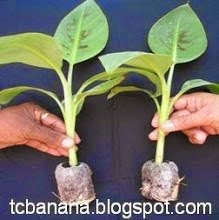
  • For the production of nematode free healthy TC planting material, the biotech companies have to first fumigate the potting mixture used for secondary hardening stage. If the symptoms are noticed during the secondary hardening period, it is advisable to apply  Carbofuran 3G (Furadon) @ 10 gm in each poly bag containg the plant. Usage of soilless growing media like 'Jiffy' pots/bags is also a viable option.
  • Application of Neem cake 500 grams / plant at the time of planting and 1 kg/plant 3 months after planting.
  • Rake the soil around the pseudostem and apply Carbofuran 3G (Furadon) @ 10 gm per plant during planting and 25 gm per plant during 3rd and 5th  of planting will control the infestation. In the fields where Nematode infestation is rather high, it is advised go for a total of 80 gram of Carbofuran 3G/plant in not less than 4 split doses. 
(OR) 
Apply newer nematicides like Rugby10G (Cadusafos 10G) @ 10 gram/plant or Caldan4G (Cartap hydrochloride 4G) @ 10 gram/plant, one at the time of planting and second by 3rd MAP (Months After Planting) for a successful control of the nematode populations. The cost benefit ratio worked out to be much cheaper in the above mentioned newer nematicides when compared to Carbofuran3G.
Some farmers of Theni district, Tamilnadu are applying different nematicides  for each application say Carbofuran in I dose, Thimet in II dose and Caldan for III dose and the results are found to be excellent.
  • Nimbicidine  or Neemgold  @ 1.5%  - 30 ml for small plant and 1 litre for bigger plant is also effective. 
  • As a bio-control measure, Paecilomyces lilacinus @ 25 gm per plant has also proved very effective in controlling nematodes. Addition of Trichoderma viridi 25 gm/plant, VAM 50 gm/plant  and Pseudomonus fluorescens 25 gram per plant will give very good results. See the link for biotech remedial measures.
Courtesy: NRCB, Trichy.
 Regards,
A.Vishnu Sankar

Insect Pests - Aphids, Thrips, Leaf eaters and Spider Mites

INSECT PESTS - Aphids, Thrips, Leaf  eaters and Spider Mites:
The aphids suck the leaf sap. Thrips feed on flower tips causing black spots on the fruits and spider mites colonize on the lower side of banana leaves and cause damage. Sometimes caterpillars and leaf eaters also damage the crop severely.
For aphids spray of Neemazol 2.5ml /lt or Rogar (Dimethoate) 2ml/ lt has proved effective. Skirting of bunches by perforated polybags can prevent damage by thrips. For spider mites and leaf eater or caterpillars spray of Kethane 2ml /lt and Cybermethrin 2ml/lt respectively, is recommended.

Bacterial disease - Erwinia head rot or Soft rot or Snap off or Tip Over

BACTERIAL DISEASE - Erwinia head rot 
(Soft rot or Snap off or Tip over):
Symptoms:

This bacterial attack is normally construed by farmers as fungal attack by mistake. This attack is known by different names like Erwinia attack, Head rot, Soft rot, Snap off and Tip Over. Tissue culture raised Banana plants are prone to this bacterial attack.

This disease is caused by soil borne bacteria Erwinia carotovora that enters the young banana plants through wounds that may be sustained at roots at the time of planting. They are also carried in to the plant through decaying outer sheaths of the rhizome that may be occurred due to some fungal infection.

Underground stem of young plants get infected by this bacterium, leading to extensive rotting and emitting of odour.  Older plants show rotting at the collar region (the region where stem originates from rhizome) and leaf bases. The affected part will become so weak that it will snap off the corm easily even for a normal wind force. In severe cases, pseudostem base becomes swollen and splits. Affected portion looks yellowish brown with a definite brown margin. Disease also spreads to the daughter suckers of the clump.

Observed commonly during hot summer months and during rainy season too after 3rd to 5th months of planting in the field. The pathogen is soil borne and spreads through water. Rotting of collar region leads to drying of outer and inner leaves. If affected plants are pulled out it comes out from the collar leaving the corm that is why called as 'Snap off' or 'Tip over'.

Erwinia Soft rot / tip over bacterial disease attack on Banana

 
Erwinia Soft rot bacterial disease attack (early stage) on Banana raised in 'Jiffy' pots.

Control:
  1. During hot summer periods tender roots of Tissue Culture plants may get damaged (burns/scorching) due to excessive heat build up of the surface soil resulting in decaying of the affected root portion. The soil borne bacterium 'Erwinia' enters the plant through the above wounds in the roots. So, this bacterial attack on Tissue Culture plants can be effectively controlled by maintaining sufficient moisture around the root zone of the plant during (hot summer) initial months to prevent heat injury to tender roots.
  2. Drip irrigation may be done preferably during early morning or late evening hours and avoid irrigating the plant during hot noon.
  3. Sudden rainfall during hot summer may also results in severe bacterial attack on plants. So always maintain moisture around root zone to effectively prevent the attack which is known to severely hurt the farmer economically.
  4. Provide good drainage wherever water stagnation occurs in the field.  
  5. In case of tissue culture plants, one week before planting prepare a solution of 400 gm of Fytolan (Blue copper or Copper oxy Chloride - COC) + Streptomycin with Tetracycline ( Streptomil, Crocin ) which is available in 6gm pocket in the market, total 42 gm i.e 7 pockets + 200 litres of water and drench the polythene bags (i.e., all the Poly-bag plants) in the nursery. For Tissue culture plants that are already planted, take care to apply the above solution very close to the plant so that the root ball gets drenched fully. This application prevents not only 'Erwinia' but also any other fungal root infection effectively. Please note that Streptomycin acts well in conjunction with COC.
  6. Drenching the soil around the plant with 0.1% Emisan in 1st and 3rd month.
  7. Spray 0.05% Streptocycline on the plants at weekly interval for 2 to 3 weeks soon after the incidence.
  8. For very severe attack, drench the soil around the plant with 2% Bleaching powder (20gms /lt) solution in water, weekly for 2 weeks.
  9. For a novel method for effective control of 'Erwinia soft rot' in Banana plants over 3 months of age, please refer this link:'Pseudostem Injector'.
Regards,
A.Vishnu Sankar

Intercultural operations

 INTERCULTURAL OPERATION:-
  • Management of daughter sucker:
Unwanted daughter suckers should be kept under check by desuckering once in 30 days for the better growth and development of the mother plant. It is better to damage the inner growing part of suckers rather than their removal. Kerosene (2ml) can be put on the center of damaged suckers to kill the meristem.
  •  Weeding:
Two weedings in the initial growth phase is necessary to keep the field free from weeds. Spraying of Gramoxone / Round up (2 lt/ ha) before planting is recommended.

  • Removal of male floral bud: (Denavelling)
It helps in fruit development and increase of bunch height. The male flower bud should be removed one month after emergence of last hand.

  • Earthing Up:
Keep the soil loose by harrowing at different intervals and do earthing up after 3-4 months of planting raising the soil level around the base of plants by 10 inch – 12 inch. Preparation of raised beds after planting is always better for putting the drip lines at 2 inch – 3 inch distance from the plants.

  • Trashing & Propping:
Removal of dried and diseased leaves from the field is recommended. Propping / Supporting the plants with heavy bunches can be done by suitable propping material like a stick with ‘V’ shape at one end or with bamboos. Cover the peduncle / rachis of the bunches with dried leaves to protect from sunlight during summer and bunches should be covered by perforated white or blue polybags or skirting bags to avoid pests / insects.

  • Harvesting:
Utmost care in harvesting of bunches should be taken in order to retain fruit quality. Stop irrigating the plants at least one week before harvest as it reduce fruit quality & shelf life. Harvest the bunches 100-110 days after bunch emergence. Angularity of fruits should disappear at the time of harvesting. The tissue culture raised crop gets ready for harvest within 11-12 months of planting.

Fertigation schedule for Banana and advantages of using Water Soluble Fertilizers

FERTIGATION:
Fertigation is the process of applying the right quantities of different nutrients in the right proportions for a particular crop based on its requirements at different stages of crop growth. For this purpose, use only water soluble fertilizers.
 
VARIOUS TYPES OF FERTIGATION SYSTEMS

 
A COMPOSITE FERTIGATION UNIT WITH VENTURI ASSEMBLY


 ADVANTAGES OF FERTIGATION TECHNOLOGY:
  • Maximizing water & fertilizer use efficiency by 30 to 40% 
    Increases the availability & uptake of nutrients
    Delivers water & nutrients – root zone
    Decrease nutrient losses from leaching
    Maximizing crop and soil productivity
    Prevents soil degradation as the soluble fertilizers have low salt index.
    Steep-slope & marginal land – cultivation 
    Minimizing production cost 
    Saving labour and water
    Minimizes pollution of ground water by preventing run-off and leaching. 
    Higher yields and top quality produce
RECOMMENDED DOSAGE FOR FERTIGATION:
To attain high yield in Banana, it is essential that all limiting factors in the cultivation are identified and minimized. One of the major impediments other than problematic farm soil and irrigation Water is the poor knowledge among farmers about fertilizer application.

Farmers are blindly following ‘Blanket recommendation’ of Agriculture Universities & Research Stations without considering the native fertility of his farm soil. By following ‘Blanket recommendation’, there are more chances of lesser or excessive application of fertilizer doses. In other words, by applying lesser fertilizers the yield will get affected and by applying more there is avoidable monetary loss in addition to physiological stress the plant undergoes due to overdose and deterioration of soil health due to accumulation of chemicals in the soil starta. 
 
Farmers have to understand that the fertilizer recommendations for Banana cultivation provided by Agriculture Universities, Fertilizer / Biotech / Drip Irrigation companies as mere guidelines and the correct method is to arrive at a fertilizer application schedule based on your field soil test reports.

One of the General fertilizer recommendations for banana (Area:1 acre) for fertigation method by applying some select easily available water soluble fertilizers is:

All 19 (19:19:19) -220 Kg,
MKP / Mono Potassium Phosphate (0:52:34) – 40 Kg,
Potassium Nitrate / Multi K (13:0:46) – 760 (640) Kg
Urea – 170 Kg.

FERTIGATION SCHEDULE FOR BANANA: 
Fertigation schedule of water soluble fertilizers for one acre TC plantation of Grand Nain (6 feet X 5 feet spacing). 

Days after Planting
Grade of Fertilizer
Total Qty
(Kg)
Kg/day/acre
Water
Requirement
(lit/plant/day)
1 – 45 days
19:19:19
13:0:46
Urea
100 Kg
80 Kg
40 Kg
2.22 Kg
1.77 Kg
0.88 Kg
4
46 – 90 days
19:19:19
13:0:46
Urea
120 Kg
80 Kg
40 Kg
2.66 Kg
1.77 Kg
0.88Kg
8
91 – 135 days
0:52:34
13:0:46
Urea
40 Kg
120Kg (100)
50 Kg

0.88Kg
2.66 Kg (2.22)
1.11 Kg

12
136 – 180 days
13:0:46
Urea
140 Kg (100)
40 Kg
3.11 Kg (2.22)
0.88 kg
16
181 – 226 days
13:0:46 
140 Kg (120)
3.11Kg (2.22)
20
227 -  270 days
13:0:46
120 Kg (100)
2.66 Kg (2.22)
24
271 – 300 days
13:0:46
80 Kg
2.66 Kg
24

NOTE OF CAUTION 1:
Please note that the total cost of fertilizers will be exorbitantly high if you chose to use the entire fertilizer requirement as water soluble fertilizers.

SUGGESTIONS TO REDUCE THE COST OF CULTIVATION: 
The entire Phosphate ('P') requirement can be applied as basal and as top dressing, directly as soil application within 3 - 4 months of planting.

Nitrogen ('N') can be given as Urea and Ammonium Sulphate which are very cheap and fully water soluble.

Potassium ('K') requirement can be met by using white colour MOP which is highly soluble when compared to red coloured ones which are normally available in market.

Water soluble fertilizers are very costly so use them judiciously. There are farmers who give fertigation 2 days / week and there are some who give fertigation daily from the date of planting to harvest.

In addition to Nitrogen ('N')  and Potash ('K'), Secondary nutrients (Calcium, Magnesium and Sulphur) and Micro Nutrients also should be applied through fertigation at recommended dosages at the appropriate growth stages to reduce cost of cultivation. 

Except Calcium and Boron which are available as Calcium Nitrate and Borax (Sodium tetraborate), all the other nutrients are available in ‘Sulphate’ form i.e., Magnesium sulphate, Zinc sulphate and Ferrous sulphate, Copper sulphate etc., which are fully water soluble in nature

FERTILIZER TARGET CHART FOR BANANA ADOPTING
PRECISION FARMING TECHNOLOGY:

CAUTION: REQUIREMENTS GIVEN HERE ARE TARGETS ONLY,
SO DO NOT APPLY THE GIVEN QUANTITY AT THE GIVEN AGE.


T A R G E T


GROWTH STAGE
Age
Requirement in gms/plant
Requirement in %


N
P
K
N %
P%
K%
EARLY ESTABLISHMENT STAGE -I
30
30
30
10


45
45
40
20


60
60
60
40
21
50
11
ESTABLISHMENT STAGE -II
90
90
80
80


120
110
90
120
19
25
21
VEGETATIVE STAGE -III
150
150
120
160


180
180
120
200


210
200
120
240
32
25
31
SHOOTING STAGE- IV
240
230
120
270


270
260
120
310


300
280
120
350
28
0
29
DEVELOPMENT OF BUNCH AND HARVESTING STAGE -V
330
do
120
380
0
0
8


280
120
380
100
100
100


CAUTION: REQUIREMENTS GIVEN HERE ARE TARGETS ONLY,
SO DO NOT APPLY THE GIVEN QUANTITY AT THE GIVEN AGE.

The above chart is a NPK target chart that is entirely different from the 'fertilizer quantity cum schedule chart' usually recommended by Agri.Dept, Agri. Universities and Fertilizer manufacturers. 

In practical it is highly impossible to apply the fertilizers as prescribed by the above agencies. There are varied reasons like unavailability of recommended fertilizers, cost of them when cheaper ones with the same NPK value are available, scarcity of manpower to apply them, difficulty to provide adequate irrigation after fertilizer application Etc. 

Please read the chart carefully. I have not recommended any variety or quantity of fertilizers that are to be applied within a given age.

In the chart:
1.     Age is given as number of days.
2.     Fertilizer requirements are given as targets only.
3.     Learn to calculate NPK requirement in the following links:
4.     Since the figures given in the chart are targets, do not apply the given quantity at the given age.
5.     To put it simply, apply whatever fertilizer that are available in the market that you finds them as economical (falls within your budget)the npk target should be achieved within that age.
6.     As a farmer I know very well that it is impractical to adhere to any date schedule for fertilizer application. So apply the nutrients on whatever date that you find as convenient but try to achieve the targets given in the NPK chart.

ADVANTAGES OF USING WATER SOLUBLE FERTILIZERS :

Solubility.
Application uniformity equal to that of the water
Quick dissolution in irrigation water
Minimum content of conditioning agents
Fine grained product
High nutrient content in the saturated solution
No Wastage
Can be combined with Plant protection chemicals


         Efficiency       N        P     K (%)
Straight fertilizers  30.5   20   50
Water Soluble Fert. 95     45   85 


Minimum Soil and ground water pollution
Yield increase is visible
Suitable for all crops


Water Soluble Fertilizers (WSF) vs. Straight Fertilizers (SF) :

S. No.
Characters
WSF
Straight fertilizers
1
Solubility
Readily soluble
5 -7 minutes
Slowly soluble
12 – 24 minutes
2
Stock solution
10 -17 % Solution
Require more days to prepare.
3
Dispersion of Nutrient particles
Uniform
Not uniform
4
Filtration
No need to filter
3 – 4 times filtration is must
5
pH  of the 1% stock solution
3.5 – 5.5 pH
5 – 8 pH Neutral and Base
6
Salt index
40 – 50
75 – 95
7
Nutrient loss
Less
More
8
Labour requirement
Less
More
9
Possibilities for mistake
Less
More

LIST OF WATER SOLUBLE FERTILIZERS RECOMMENDED:

Name of the fertilizer
N %
P %
K %
S %
Ammonium sulphate (NH4)2 SO4 is the best slow releasing nitrogenous fertilizer.
20.6
0
0
23
Urea
46
0
0
0
Ammonium nitrate
33


Phosphoric acid
0
61
0
0
Potassium chloride (MOP). (Potash in white colour crystals is more soluble than in red colour ones normally available in market).
0
0
60
0
CAN - Calcium Nitrate


Poly Feed / All 19 (19 : 19 : 19)
19
19
19
0
MAP –Mono Ammonium Phosphate
12
61
0
0
Multi K - Potassium Nitrate / KNO3
13
0
46
0
MKP - Mono Potassium Phosphate
0
52
34
0
SOP – Sulphate of Potash / Potassium Sulphate
0
0
50
18
Water soluble Sulphur, Borax (Sodium tetraborate) and all the other secondary and micronutrients which are available in ‘Sulphate’ form (available as salt as well as  liquid) i.e., Magnesium sulphate, Zinc sulphate, Iron chelate/ Ferrous sulphate, Copper sulphate  etc., can also be used for fertigation.


Use ‘Specialty fertilizers’ which are water soluble fertilizers with multi nutrient combinations with or without secondary elements or micronutrients. They are available in the liquid or crystalline form and can be used for fertigation and foliar application.

Name of Speciality

Fertilizers:                 N %     P %     K %                 Micronutrient (ppm)
Polyfeed, ‘All 19’     19        19        19                    with Micro Nutrient
Polyfeed, ‘All 18’     18        18        18                    with Micro Nutrient
Polyfeed, ‘All 20’     20        20        20                    with Micro Nutrient
Polyfeed – Fe          11        42        11                    +1000 – Fe (Ferrous)
Polyfeed – Mn         19        09        19                    +500 – Mn (Manganese)
Polyfeed – Zn          19        09        28                    +75 – Zn (Zinc)
Polyfeed – B            15        15        30                    +200 – B (Boron)
Polyfeed – Mo         14        10        34                    +35 – Mo (Molybdenum)
Polyfeed – Cu          17        10        27                    +55 - Cu (Copper)

NOTE OF CAUTION 2: - WHAT TO DO AND NOT TO DO:
  1. Don’t put water into the Fertilizer eg. Acid fertilizers.
  2. Never mix Phosphatic fertilizers with Sulphur and Sulphate form of fertilizers like Ammonium sulphate, SOP – Sulphate of Potash / Potassium Sulphate,  Magnesium sulphate, Zinc sulphate, Ferrous sulphate etc.,
  3. Don’t mix sulphate form of fertilizers with Calcium.
  4. Don’t use Ca and Mg fertilizers for fertigation if the water is ‘HARD’.
  5. Most of the Water Soluble ‘P’ fertilizers react with Hard water.
  6. Use Phosphoric acid only in the water with low pH.
  7. Avoid using Potassium Sulfate in Hard water Irrigation should be continued at least 30 minutes after fertilizing to prevent build up of fertilizer residues in the drip lines and in drippers.
  8. The solid phosphatic fertilizers are insoluble and prone to clogging. Do not use them for fertigation.  So, Rock phosphate , Single Super Phosphate (SSP), Di - Ammonium Phosphate (DAP) are not suitable for fertigation.
  9. Do not use Soil amendments like Gypsum and other calcium supplying materials like lime (CaCO3) in fertigation system.
  10. Never mix chlorination and fertigation because it may cause unwanted chemical reactions.
CHEMICAL REACTIONS OF FERTILIZERS WITH IRRIGATION WATER:

The chemical quality of your irrigation water may affect both crop yields and soil physical conditions. It may contain essential plant nutrients, like calcium, magnesium, sulphur and boron which will definitely influence the fertilization program. Therefore, testing the irrigation water prior to selecting the site and the crops to be grown is critical. Adequate levels of these nutrients in the irrigation water can save on fertilizer use, as nutrients present in the irrigation water are available to the plant.

In water with calcium, magnesium and bicarbonates, if phosphate containing fertilizers are mixed, calcium and magnesium phosphates are formed. By reducing pH, this effect can be reduced.

If polyphosphate fertilizers are mixed with water with Calcium and Magnesium ions, gel suspensions are formed which clog filters and drippers.

When water contains Calcium and if sulphate fertilizers are mixed with it, Calcium sulphate is precipitated. With rise in temperature, this problem would get aggravated.

When water contains Calcium and bicarbonate ions, mixing with Urea precipitates Calcium Oxide commonly known as lime.

When Phosphoric acid is mixed with water containing more than 50 ppm of Calcium, Calcium Phosphate is formed. Calcium phosphate is nearly insoluble and does not readily dissolve. 

If water contains more than 0.1 ppm of Iron, and if Calcium or Phosphate fertilizers are injected, then  Iron precipitate is formed.

As it is difficult to find out what kind of chemical reaction that would occur when mixing with any fertilizer, normally it is recommended that a following test is conducted. The fertilizer solution equal to the same concentration with which, it would be applied to field is kept in a container for sometime under the same environment as that of the field. If, some precipitate get formed, then that fertilizer should not be applied through fertigation.


For more details visit the following links: 
Problems Related toIrrigation Water Quality.
Mechanism behind clogging of Drippers in Drip Irrigation System.
Management of Clogging of Drippers and Drip lines.
Chemical Reactions of Fertilizers with Irrigation Water.

Regards,
A.Vishnu Sankar

Total Pageviews

Twitter Delicious Facebook Digg Stumbleupon Favorites More

 
Design by Free WordPress Themes | Bloggerized by Lasantha - Premium Blogger Themes | fantastic sams coupons